Latest Posts -
Recent Posts
Showing posts with label indie guest post. Show all posts

Guest Post: Coming Soon w/ Charlotte Abel

Coming soon: Interview with Hunter Feenie from "Enchantment" and "Taken"

Howdy there, I'd love to do a guest post to entertain all y'all lovely ladies but I gotta get ready for a book launch. Seems Ms. Abel done waited too dang long to git all her stuff together.

She's still trying to decide on a cover for "Taken" for gosh sake and the dang book's supposed to be published this coming Friday! Can you believe that? Me neither!

If you ain't had a chance to read "Enchantment" yet, ya might wanna git on it. I play a much bigger part in "Taken" so you'll want to be sure you're all set to go.

Once we get this book launch "taken" care of (pun intended) I'll come back and tell y'all how I wound up as an exotic male dancer in Vegas. And no, I ain't a stripper! Jeeze! A fella cain't get no respect.

Posted on Monday, February 27, 2012

Guest Post: How do authors approach their writing? w/ Amy Maurer Jones

Contributed by @AmyJonesSQ

What does the author of a story do first in her writing adventure? Does she draw up the plot or create her characters? Stephanie Meyer once said that her idea for Twilight blossomed from a dream. She dreamt about a beautiful, magical boy who fell in love with a lovely mortal teenage girl. She envisioned the two star crossed lovers in a quiet meadow. In the same interview she mentioned that the famous meadow scene from Twilight was the first scene written even though we all know it didn’t take place until close to the middle of the story. If this is true one could make the argument that Stephanie Meyer created her characters before she whipped up her plot. Personally, I find this very difficult to do. While I do feel strong characterization is the key to a strong story or dramatization I have to know the world and circumstances the characters exit in before I can really develop them. For this reason I begin my writing journey with a loose plot. For example, my loose plot for Soul Quest went something like this.

A God – like being discovers demon - like creatures on Earth. The demons are trying to kill human kind and take over the world. His resolution is to empower four teenagers with supernatural abilities in an effort to save the world from disaster.

This scenario actually evolved from a dream I had. So, it must be a common strategy for authors to literally dream up their stories. From this loose plot I immediately knew I had to create at least six powerful characters. I needed to create a God – like being, four teenagers who possessed supernatural abilities and a demon. Before I could begin to develop these characters I realized I needed to know/decide why the demons were attacking the Earth and why the God – like creature cared about what they were doing. Once I achieved this I was able to flesh out the characters I’ve come to know and love in The Soul Quest Trilogy.

What is my process for developing characters? There is a science to my madness. I start in the magazine isle at the grocery store. I swear to you I am not bluffing. All of the paranormal excitement begins on isle six at Food Lion. Seriously, magazines are a great tool for character development. I use this same technique with my theater arts students in the class room. A snap shot of a woman in a field of flowers could be a character in a play or a book. Who is she? What is she doing? Why is she there? When did she go there? How long has she been there? How does she feel? Why does she feel that way? You can grasp a million ideas from a single picture. You know what they say… a picture is worth a thousand words. Magazines are helpful when you are researching characters of any age but I find them particularly useful when writing about my younger characters. I am a young adult writer so I have to know what types of people my readers will relate to and truly believe to be teenagers in my story. This can only happen if they fit into the current popular culture. I flip through the popular teen magazines to see who young people find cool, handsome and interesting. I want to know why they feel that way about them. I’m especially interested in their appearance and attitude. What do they look like, what do they wear, what is their style and personality? From this I can create my character’s physical appearance, personality strengths and weaknesses, their objective or goal in the story, the obstacles that stand in their way and tactics they may use to resolve their problems (… and you thought I was crazy for doing character research in the grocery store).

Of course, magazines are just a starting place. Most of my character’s emotions and feelings stem from my own experiences and perceptions in life. My main character in Soul Quest is Liv Glyn. Liv is a smart, sweet and outgoing girl with a lot of common sense and good ideas. She is incredibly perceptive and humble and she believes overly impulsive, boastful people are naïve and careless. Many of Liv’s feelings and views on life are similar to my own. I named her after my daughter, Olivia and gave her similar physical attributes to define her beauty. The name Olivia is Latin in origin and means olive tree or branch of life. It is from this meaning that I came up with the idea for my teenage Oracles to possess affinities for Earth, fire, wind and water.

Whether an author begins with an idea for a plot or character first doesn’t really matter. There is no right or wrong way to do it. Each person is different creatively and so creativity is going to manifest itself in a unique way in all of us. When I choreograph a dance I rarely start at the beginning, I usually begin somewhere in the middle. I don’t know why exactly, I just know that when the piece starts I like to know the direction its taking and when it completes itself I need to understand where it evolved from. Similarly, when I am directing a play I will not necessarily begin with scene one. Instead, I will analyze the script and determine what scenes prove to be the most difficult. In most cases these scenes are at the heart of the story where the characterization and plot are most complex. If I can effectively direct these scenes the rest of the play should naturally lead up to them and wind down to a resolution. Writing isn’t any different. Begin with a plot or a character. Flesh out your storyline and invent your characters later. Write about your character’s feelings and interactions with one another first and then build a plot to support the scene. It is simply a matter of what process works best for you or your current work in progress.

- Amy Maurer Jones, author of The Soul Quest Trilogy


Posted on Thursday, February 23, 2012

Guest Post: Seven Questions to Ask Before Self-Publishing w/ Susan Kaye Quinn

Contributed by Susan Kaye Quinn

Are you considering self-publishing? If so, that means you are the publisher, so you need to think like a publisher. If you're considering going indie, ask yourself these questions to see if this path is right for you and your book(s):

1) Is your craft ready?
Have you written more than one or two books? Do you have a writing group or a stable of critique partners who you can call on for feedback? Do you feel confident in your storytelling and your writing craft? You are more likely to find success as an indie writer if you have hit your stride as a writer, rather than just starting out. All the time you spend focusing on craft will pay dividends when you do eventually publish.
Don't rush it. Be patient.

2) Is this the right book?
Is your book the kind that could successfully sell in the indie market? Adult titles do best in indie, YA does well (especially those with cross-over appeal), and even literary novels, anthologies, shorts and other forms are starting to have success. Middle grade and picture books do less well. Series tend to bring more success for writers than stand-alone novels. Are you planning to write more books? Is your book the start of a series? Will it help you to build a fanbase for your future works, or do you not plan on writing more in that genre?
Plan ahead. Lead with your best work.

3) Are you willing to invest money and time in the book?
Publishers would invest time and money in editing/copyediting/coverart for your book - you should plan on doing the same. Are you willing to spend time and money on marketing (ARCs, blog tours, review requests)? You will need a substantial push to get enough sales/reviews to get word-of-mouth going. After that, the Amazon marketing machine might kick in to help. Or it might not (the ways of the Zon are mysterious). If you just throw something out on smashwords, or even Amazon, but do nothing to market/promote it, you are unlikely to sell more than a few hundred copies (maybe this is acceptable - see #6).
Going indie is like running a small business.

4) Are you willing to give up the dream of paper for this book?
As an indie publisher, most likely 90% of your sales will be ebooks. If a large fraction of your sales are paper, it is probably because most are bought by friends and family that want a paper copy. Selling thousands of print books is not going to happen as an indie, nor do you want it to. Getting into bookstores may sound great, but it brings the possibility of returns, which can easily eat up whatever profits you have made. You can still have paper, if you want (it's useful for signings, libraries, giveaways), but paper is unlikely to be the main part of your business.
Indie is not a route to seeing your book on the shelf at B&N.

5) Are you trying to score an agent or book contract by going indie?
Indie publishing is not the new query. This idea has been tossed around due to high-profile instances of authors like Amanda Hocking going for traditional publishing deals or agents plucking authors out of the bestseller lists. But I know many authors who are selling more than NYTimes bestsellers and not being flooded with offers from the Big 6. Still other successful indie authors have turned down traditional publishing offers after going indie and are scooping up international deals and optioning movie rights, all while not giving up their ebook rights. Why? Because they would lose money by taking a traditional deal. Indie publishing and traditional publishing are really two different beasts. Success as an indie brings many rewards (including financial ones). If you are yearning for a traditional publisher, you should pursue that route directly.
Indie is not the route to traditional publishing.

6) Do you have a support system/social network to help launch this book?
Are you comfortable with social networking? Do you have a blog/twitter/facebook page (one or more of these is fine) that you use to connect with people, whether writers, friends, or fans? You will have to extend your reach beyond your immediate social network to reach new readers, but you will be more comfortable doing that if you have an online presence and are facile in using online tools. And your immediate social network will help get your book out in the world to begin with. You don't have to have a huge following to launch an indie book, but you need to have some sense of how the online world works.
Friends matter. You can't ignore social networking.

7) Do you have concrete goals and a marketing plan to reach them?
You should decide your goals and make a marketing plan before making the decision to go indie. Will you be happy making back your investment in the book? Do you want to reach a certain number of sales? Do you want to get on the bestseller lists? You may dream of an overnight bestseller, but achieving that will take more than dreaming. You need a plan of how to get there. I worked up a full marketing plan for Open Minds before I made the decision to go indie, and it’s served me well. I set goals that I wanted to achieve (have the book break even, reach a certain target of sales), and developed a marketing plan to make it happen. The plan definitely evolved along the way (and continues to evolve), but making the plan ahead of time helped me decide if indie was the right choice for Open Minds. And having realistic goals helped to keep my expectations grounded while going through the process. Be smart when you make your plan, and you will give your book the best chance of success.
Set Goals. Make a plan. Keep your expectations realistic.

I believe that the “right” publishing path can easily be different for each book and definitely for each author. I personally could not be happier with my indie experience so far. I love being in charge of my writing career. But I have manuscripts on my hard-drive that I will not indie publish, unless/until the time is right. And probably after they have been rewritten. I want to make sure they have the best chance of success before I send them out into the world.

Are you thinking about going indie? What questions are you asking yourself?

UPDATE: Check out John Locke's article on his Indie Publishing Deal with Simon &Schuster (yes, you read that right).

Posted on Wednesday, February 22, 2012

Guest Post: The War of Worldcraft: Creating New Worlds w/ Hope Collier

Contributed by Hope Collier

World building is one of the most important factors of a good story. It puts the reader in a place they've never been otherwise, so it's imperative they grasp the full concept laid down by the author. Unique details make this place its own universe filled with distinct (and oftentimes inhuman) characters, a government with unusual politics, and an unfamiliar social structure. The author has to take into consideration factors like the weather, varying laws, architecture, landscape, history, settings, biological factors such as animals and plants, mythology and so on. The more fantastical the world, the more building is required.

Some genres involve greater attention than others. My paranormal novel (The Willows: Haven) takes place on earth, but involves some non-human characters in enhanced places. The primary focus of my world building revolves around the social structure of this new society, the biological aspects of the beings themselves, some ancient history, a little architecture and mythology, and the law. This means I don't have to worry about creating animals like a chimera or filling the heavens with a purple moon. Look at your story to determine which aspects affect your world-building.

I want to take a moment and highlight a few aspects in my own writing, since I can explain them a little easier.

Social Structure/Law: This is an extremely important feature in Haven. The characters don't live under the same rules as humans. They have their own social constructs and hierarchies. Different laws govern most aspects of their lives, and it's very important that I make those laws clear to the reader. If the weight of their choices isn't felt, it defeats the purpose and loses power.

Characters: I don't want to get into "what" my characters are as I don't want to spoil it, but you already know they aren't human. While they have human traits, their biology is entirely different. The way they react to things in their environment, their preferences and requirements to thrive, are different from humans. It makes them what they are! This is one area where detail is imperative. If typical things such as food and sleep don't sustain them, something else does. Just like humans, there are requirements and limitations to flesh out here.

History: The history behind my characters' lives and situations is the basis behind the whole story. It's the thing that drives the plot. If there isn't reason for the characters to behave the way they do, then the story is going to fail. The events leading up to my protag's current state are the drive behind their social structure and law. Even if you don't have the history in your story, it's important to have it in your head. Cause must drive action, otherwise it's unrealistic.

Architecture: For most of Haven, the architecture is modern but hints at the life my protag experienced during her life. As the story unfolds, she's introduced to a society where the beings value nature and bend it to their purposes rather than destroy it. In a world where the characters are as much a part of nature as nature itself, I had to find a way to incorporate that.

There are countless other aspects to consider when world building. Just look at ours. We have beliefs and moral issues, matters of religion, science-based, and such. Every tiny facet of life outside the norm has to be addressed and characterized if you want a believable setting.

Happy writing!

Posted on Tuesday, February 21, 2012

Indie Guest Post: Pandora For Books w/ M. Clifford

You’re all familiar with Pandora, right? You create your own stations based on artists whose music you already like. Then Pandora, using super futuristic algorithm technology, starts pumping out songs by tons of other musicians who are similar to your faves. This is awesome, because you get introduced to artists who you may have scrolled past if Pandora hadn’t chosen them for you. My favorite Pandora station of the moment is my Ray LaMontagne station. Through it, I’ve found groups like Mumford & Sons and Zac Brown Band. If you didn’t already know, Pandora functions by utilizing the Music Genome Project, a tool that doesn’t care what singers are popular or who’s willing to pay to be “recommended”. It selects music for you based purely on the structures within the particular songs you have already marked as “liked”. The more you “like”, the more your music library will share a similarity. One that you may or may not be able to recognize.

SO… The other day I was listening to Pandora while writing my next book and thought, “Wouldn’t it be amazing if there was something similar out there recommending authors based on what you already like? Like Pandora for books?”

A quick Google search later, and I find it. It’s called BookLamp.

Unlike sites like Amazon that recommends based on buying trends or Goodreads that uses social recommendation engines, BookLamp utilizes the technology of the Book Genome Project to analyze the actual content and make-up of a book. Something they call StoryDNA. It looks at every aspect of a story from settings and pacing, to character types and themes. Even crazy stuff you wouldn’t expect, like “are there a lot of horses?”. It allows readers to get a suggestion for that next great book based on nothing else but the content. And one of the greatest things about BookLamp and the Book Genome Project is that they include everyone – indie authors like me, or the big time folks like J.K. Rowling and Stephen King. At BookLamp, authors and their stories are equal.

I spoke to a big wig at BookLamp recently and I’m excited to say that they really have a strong sense of what readers are looking for and a respect for their place in the future of reading. Here’s a quote from their website www.booklamp.org :

“[BookLamp is] impervious to outside influences like advertising budgets - so it's an equal friend to the front, mid, and backlist author. At BookLamp, we're a fan of the idea that it is what's in the book that matters most.”

I personally can’t get enough of this and thought it was the perfect thing to include in Lovely Lit’s Indie Author Month! I wanted to draw some awareness to this (fairly) new technology because I can already see it being incorporated into the iBookstore or Kindle for a seamless reading experience. In my novel THE BOOK, I have a similar system that tells readers what to choose next on their ereader with the option to ignore the program (if it lets you…). ☺ Since I already went there in my mind a few years ago, here’s the suggestion I can foresee:

BookLamp has discovered that M. Clifford’s FELINIAN has a 97% compatibility score with the books in your library. Do you want to read it?

Pretty amazing, right? Like eHarmony for books. Sounds weird to say it like that, but hear me out. When you think of it, reading is a private, emotional experience that needs to be protected in a way. How often do people get set up on “blind dates” with a novel, only to type #epicfail on their friend’s twitter page four days later after chucking that heavily suggested book through the front window? It’s happened to all of us. Isn’t it nice to find a program that recommends a book based solely on your preferences?

So, how long until we can start using this? Well, while they technically began in 2003, their site went live this past August (2011). I imagine it takes a lot of work to delicately break down an entire novel. I’d suggest going there to poke around. It’s fun. They are still building their library of available titles, so don’t get upset if your favorite book isn’t in their database yet. The only way BookLamp can add books to their catalog is if publishers give it the thumbs up, and I’m sure they are wary of new and uncontrollable technology. But I say, if you want a certain book included or if you have a relationship with a publisher, get them in touch with BookLamp!

When it comes to indie authors like me, I can’t help but get excited. I can already imagine finding my paranormal YA book, FELINIAN popping up on BookLamp when readers search for books like TWILIGHT, UNEARTHLY and EVERMORE because all the stories deal with teenage girls, new-found super-human abilities, new high schools, not fitting in, urban settings, love triangles and self-discovery. What a powerful way for otherwise “back shelf” authors to get a spotlight on their work in relation to more well-known titles! I’m eager for BookLamp to grow their library so their service will be more helpful to readers and writers! I’ll leave you with my favorite quote from their site:

“As a new author, you have as much authority – as much of a voice – inside of BookLamp as any other author in the world.”


Posted on Sunday, February 19, 2012

Indie Guest Post: I think I might be a stalker w/ Mel Cusick-Jones

Hello. I’m Balik, and I think I might be a stalker.

I know it sounds a bit melodramatic, but I think I must be. Not the crazed, knife-wielding, want-to-kill-her kind. It’s more the can’t-stop-looking-at-her, changing-my-life-to-match-hers, accidentally-quoting-poetry, type. But I don’t think that makes it better: stalking is stalking after all.

To be honest, I was fine until I spoke to Cassie. I lived unhappily enough in my little box; doing as I was told, thinking what I was supposed to, waiting for my chance to get out. I shouldn’t have talked to her after the exams – that was my first mistake. When we’d never spoken I could pretend that Cassie was just like everyone else, perhaps a little prettier, more intelligent, but she was certainly one of them. But now I was stuck.

Going on the early rotation at the Clinic hasn’t helped me at all. I’d promised myself it would be a few days – a week at the most – and then I’d get back to work on my plans to get out of the Family Quarter. I think I knew I was lying to myself even as I was making these arrangements in my head…But once we got here and Cassie began working with Joel I’ve found it impossible to leave. It’s stupid really – although I’m almost certain she doesn’t like him as anything more than a friend, I can’t stay away from her just in case I’m wrong. It’s nearly two weeks on from my initial decision to join Cassie on her placement at The Clinic and I’m still only managing to see her for a short while at lunch and sometimes at either end of the day if I’m lucky enough to get the timings right. Yes, I think I’m definitely a stalker.

So here I am. Sitting in the sixth floor labs trying to ignore the incessant babbling of my placement partner, Olivia, and daydreaming about the beautiful girl with the clever green eyes, who I’m not absolutely sure I can trust. Perhaps there’s only one way to find out the truth about Cassie and maybe myself? If I could get her alone somewhere, away from prying eyes, it might give me the chance I so desperately need.

Oh dear – if that doesn’t make me sound like a stalker I don’t know what would.

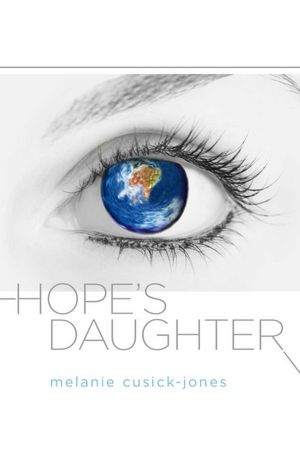
Balik appears in Hope’s Daughter by Melanie Cusick-Jones, available now. (And no – he’s not a stalker – well, not much!)

Posted on Wednesday, February 15, 2012

Indie Guest Post: So a funning thing happened to me . . . w/ Nancy Straight

I should start this with: I am a magnet for crazy. Funning things happen to me routinely. I was thrilled when I was asked to write a guest post and tossed around several ideas. I tried to think about what you might like to read and settled on something that has nothing to do with being an author, book reviews, publishing, or anything of the sort. I hope you enjoy this!

This happened a few months ago. Like all moms, it was the end of the week and I was exhausted. I was watching television with my husband in our bedroom and had dozed off. It was still pretty early in the evening, so the lights were on, but when I’m tired I don’t need dark to sleep. I was in the middle of a dream when I realized I couldn’t breathe. I startled myself awake and pulled myself out of my dream only to realize: I was now awake and I still couldn’t breathe. I looked at my husband while I was gasping for air; he was watching me with a strange look, but did nothing to help me.

My hands instinctively went to my neck and I realized the t-shirt I was wearing was tight against my neck, so with both hands, I yanked the neck of my t-shirt as hard as I could. I got air! But in the same instant I felt claws dig into my back.

Okay, I read a ton of Paranormal Romance, Paranormal Thrillers and Urban Fantasy books, so at this point my mind is racing through about 300 plots - trying to identify what beast I was up against! I couldn’t get a word out but knew my husband could see the pleading for help in my eyes. I let go of the neck of my t-shirt and the claws eased on my back, but once again, I didn’t have air.

After watching this cycle a couple times my husband simply said, “Flash is stuck.”
Flash is my very cute Jack Russell Terrier. He burrows under the covers at night because he gets cold. He had somehow burrowed under the back of my t-shirt and was trying to climb out through the neck of my shirt! Needless to say, a person’s neck and a pudgy JRT do not both fit through a crew neck t-shirt.

We both got a good laugh out of it, and I was thrilled to see that I wasn’t under attack from some sort of paranormal beast!

Author of the Destiny Trilogy: Meeting Destiny, Destiny’s Revenge & Destiny’s Wrath

Guest Post: Advice for new Writers w/ Riana Lucas

Contributed by @RianaLucas

1.) Do your research, read other books in your genre to make sure your idea is completely original. Don't be afraid to "borrow" little things, but you don't want the plot to be the same.

2.) Write what you like. If you try to write romance but you love paranormal books it is going to sound forced.

3.) Query if you want to, but don't be afraid to look into self publishing. There is nothing wrong with making your own dreams come true on your own timeline on your terms.

Thanks for the awesome advice!! :)

Posted on Monday, February 13, 2012

Indie Guest Post: w/ Lorena Angell

Hi Everyone,

I’m Calli Courtnae, sixteen year old average Junior with nothing really special or noteworthy about me, that is, if you don’t count the fact that I can read lips. I had an accident in middle school and lost my hearing for a while. I gained a full appreciation for the five senses during that time learning how to lipread and once my hearing was restored I learned more through the lips of others than I ever thought possible.

My parents are both doctors and being their only child I grew up in a home where large words and clinical terms floated across the air with ease. I am fascinated with the medical field and will pursue a PhD of my own someday. The only problem living with two extremely intellectual adults is I have little tolerance for idiots, like the athletic jocks at my school. Not all athletes are jocks, but all jocks are jerks, both male and female.

I’m a rather lack-luster athlete on the school track team. I never won a race in the 100m or even came close until one fateful day when something within me changed and I sprinted first to the finish line breaking the World records. It seemed absolutely impossible that I was the fastest human on the face of the earth, but according to my running time, I was. This event marked a new beginning in my life and I’m still unsure whether it’s a good thing or not.

You see, I was quickly scooped up by a trainer who whisked me away from Ohio to a training facility in the Rocky Mountains of Montana with Olympic dreams flying through my head. Those dreams were squashed almost immediately when I learned a most shocking fact; superhuman abilities and powers exist in the world and I’m just the latest individual to have a superpower surface. Other powers that exist are mind reading, future sight, healing, super-smell, and because of these abilities they attract the unwanted attentions of Shadow Demons that seek out people of powers. I’m a ‘Runner’ and I’m surrounded by arrogant jocks that are all insanely beautiful and paranoid that I’m a spy working for the government. I don’t know why they would instantly suspect me as being a traitor, I just got here. I have a lot to learn.

Earlier today, I participated in a time trial with other fellow Runners and found I am the slowest of the group, the newbie, a ‘muck’. I’m still unsure what that slang term means but it’s not the worst reference to be called around here; being called a ‘human’ is the ultimate insult. Imagine that.

An even more distressing bit of information has just arisen; because I finished last in the race I will be placed on a delivery team that has been assigned to transport a valuable magical diamond to a group of Healers who can kill with their thoughts. When I questioned the logic in this decision I was told that the Runners Clan never sends a team that consists of only the best athletes. What if that team was captured and killed? The clan would lose their top members. Evidently a group representing the three levels of speed from within the clan (fastest, slowest and one average), are always selected for each assignment. As the group leader explained this to me my mind couldn’t get past her choice of words, “Captured or killed.”

I'm sitting in a room similar to the locker room back at my high school in Ohio with a small group of girls who are unaware I can read their lips and their nasty whisperings from across the room. The other half of the team, the guys, entered the room. The team leader, Chris Harding, settled his eyes on me and my insides withered. I had run into him a couple of times since arriving at the facility and he clearly didn’t like me or my presence here. For some reason he felt that I was a Healer not a Runner, I had overheard, or rather read his lips, when he adamantly insisted I was in the wrong place and didn’t belong here. My trainer explained to me when I arrived that no one holds more than one power or ability and she reassured me that the Seers foresaw my Running ability surfacing. Chris was confused, that’s all.

So, here I am, feeling completely inadequate, not the superhuman Runner that I supposedly am, about to embark on a journey with the world’s most unpleasant athletes that could very well end in my demise.
That’s how my day started. I hope it will end on a different note; however, as my mother always says, “Be careful what you wish for, you just might get it.”

P.S. To read more about Calli, check out the Unaltered Series by Lorena Angell.

Posted on Thursday, February 9, 2012

Indie Guest Post: Death and Other Distractions w/ Nikki Jefford

Contributed by @NikkiJefford


Three weeks into starting my novel, Entangled, my grandmother died.

While it wasn’t unexpected (she’d suffered through Parkinson’s Disease during the last decade of her life), it was heart shattering. Grandma May was like a second mom. We lived with her many times throughout my childhood and she mentored me at work. Worse yet, I hadn’t seen her since leaving Alaska three years earlier.

But I kept plugging away at the novel.

It’s the small distractions that drag me under: FaceBook, Twitter, blogs, back-to-back episodes of The Vampire Diaries, online shopping…

But big things – they turn me into the most dedicated goal achiever. My novel became my life raft and I was rowing that baby straight to the finish line!

As I neared shore, three family members ended up in the hospital on the same day (December 1st): My dad for open heart surgery, my uncle with an irregular heartbeat, and my sister-in-law with life-threatening food poisoning.

Everyone made it out okay and then my mother-in-law’s boyfriend of 15 years ended their relationship. She threatened to kill herself then made the attempt last month, leaving behind a note. We found out on the weekend I’d set aside to make the final edits to Entangled.

She’s better now.

But I couldn’t help noticing the parallels between my book and life. Charlene, the bad twin in the book, threatens to kill herself and her sister, Graylee, “jokes” that she should have used pills (which is what my mother-in-law tried). Graylee dies (but, never fear, she’s brought back to life).

I began worrying that someone I knew would succumb to a coma like another character, but I made it to publication date without that happening. Phew!

Lately, I’ve let little things distract me from finishing Book 2 (aforementioned Vampire Diaries, etc., etc.) and I had to remind myself that if I could write through death, illness, suicide attempts, and the other crazy family dramas that defined the last three months, I can get take my paddle back up and steer this sucker back across the ocean.

P.S.  Also, here is her blog if youd like to read more about her.

Posted on Wednesday, February 8, 2012

Indie Guest Post w/ Claudia Lefeve

Contributed by @ClaudiaLefeve

When I was approached by LovelyLit to participate in Indie Author Month, I was flattered. Indie authors rely on book bloggers, as well as readers, to spread the word about our books, so it’s truly an honor to be asked.

I wasn’t sure what I wanted to guest post on, but after some serious thought, I decided to follow the theme of Indie Author Month and truly capture the spirit of this event and the wonderful authors that it celebrates.

So what does it mean to be indie author? No, I’m not going to into the semantics of indie vs. self-published vs. traditional. I’m talking about what it takes to be an indie author.

For starters, most of us, have a full-time jobs. On any given morning or night, either before or after putting in a full eight hours at the ‘day job’, we spend several hours writing scenes, researching a certain topics for accuracy, and ultimately, proofing and editing.

Aside from a holding nine-to-five jobs, many authors are also parents. These dedicated authors work all day, tend to their children and spouses, yet still find the time to create literary worlds for readers to enjoy. My applause goes out to those that can do it all.

So, you may ask, if we’re so busy with life, why in the world do we write? We write because we love the written word. We write because if we didn’t write about the characters in our heads, we’d go crazy. We write because we don’t really need eight hours of sleep. We write because it’s a part of us.

But not only do we write, we’re also entrepreneurs. Once we’ve completed a book, it’s just the beginning. For many indie’s, we’re our own publishing company. Time is taken school ourselves in formatting, work on cover art, and ultimately search for that perfect editor to ensure it’s ready to publish.

I guess you can say we’re a ‘jack of all trades’, if you include marketing to our list of responsibilities. On any given day, you’ll find us on Twitter, Facebook, and Goodreads, networking with other writers and touching base with readers. We provide guest posts and grant interviews on book blogs in order to introduce readers to our books. We even schedule blog tours, which is much easier than a traditional book tour, but hard work nonetheless.

And let’s not forget, all of this is done while working a day job, changing dirty diapers (or in my case, making sure my pugs don’t pee on the furniture), and immediately jumping into writing book two (or three, or four) in the series, or whatever work in progress happens to be next.

I admire every single indie author out there for their dedication, commitment, and determination. Every time I have wanted to give up my dream of becoming an author, I look to my supportive network of indie’s and realize that quitting isn’t an option. They’ve paved the way for many of us to succeed, most simply by leading by example.

Posted on Monday, February 6, 2012

Indie Guest Post: Cover Love w/ Jessie Harrell

Contributed by Author @JessieHarrell

If you’re planning on Indie publishing your novel, it’s critical that you invest in a knock out cover. Unless you are trained in visual arts and computer-graphic type things, you need to hire (or beg, borrow or cajole) help. I know you’ve spent countless hours – maybe even years – crafting the words and story inside your novel. But the bottom line is, your cover can make or break your book.

Is that fair? Not really.
Is it reality? Absolutely.

So my advice to you is to INVEST IN YOURSELF. I know it’s an expense, but your cover will be the single biggest piece of marketing/advertising you will do for your book. The cover will speak on your behalf when you’re not there to promote your work (i.e., the vast majority of the time).

To be a proper ad, your cover needs to accomplish several things. It needs to set the tone of your novel. You don’t want a dark and broody cover if your story is happy chic lit. Your cover also needs to be consistent with others of the same genre. We all know generally what the cover for an International crime thriller is going to look like. If you use that cover style on your middle grade novel, you’ll miss your intended audience (and probably initially attract readers who then won’t make it past the back cover copy).

You also need to consider if you’re going to use stock photography or art. If you do, there’s a good chance someone else will have a very similar-looking cover as you some day. This happens to the “big boys” too. Case in point:

The U.S. cover of The Vespertine and the Italian cover of Jessica Rules the Dark Side (the dress color was altered and the proportions shrunk, but otherwise, there’s no question this is the same photograph).

To avoid this problem, I recommend scouring DeviantArt.com or other creative websites for images that you love and then asking the artist if you can purchase rights to use the photo. You’ll never know until you ask and you might find that it doesn’t cost much more than stock photography.

Finally, I recommend that before you get started on designing your cover, that you spend some time browsing other covers in your genre and identifying the ones that you like best. Find ones that have the right color scheme, the right character focus (e.g., do you like ones will silhouettes in the distance or extreme close ups of a face?), and convey the sense of the story you are trying to sell. Once you’ve pinpointed your style, picking your own art and design will be that much easier.

If you’re in the market for a top notch cover designer, here are some folks who come highly recommended:

VLC Productions (Vania Stoyanova) – www.vlcphoto.net
PhatPuppy -- phatpuppyart.com
Dale Pease – walkingstickbooks.com
And my own designer, Josh Longiaru – jlongiaru.carbonmade.com

Indie Guest Post: Why Werewolves? w/ Quinn Loftis

Contributed by @AuthQuinnLoftis
I'm a 31 year old wife and mother, and yet I write young adult paranormal romance. I'm not shy about it. Everyone who knows me knows that I've written Prince of Wolves, and most of them have gotten it; out of love, sympathy or because they are genuinely interested in the genre'. I do get asked on a regular basis, why werewolves?

My usual response is just- it's what I'm interested in, what I like to read. That of course is a pretty generic answer so here I will try to clarify, add a little color if you will.
Werewolves are the "bad boys" of the paranormal world. Not to say that vampires don't play their wicked part. But werewolves are the muscle, the outsiders with attitude. They never walk away from a fight, they always finish what they start and they have a forever kind of love. They have a presence when they walk into the room that makes people want to step back and take notice. They are aggressive, brave, dominant, protective, faithful and loyal to their family. I'm fascinated with the pack dynamics that can be incorporated into their stories. I think that often their characters are very redeemable because of their animal nature and I love the ability to stretch a character's boundaries with that animal nature.

Another concept that appeals to me and I think others tend to enjoy is the whole "true mate" concept, which in any werewolf book is a huge selling factor. The little girl in all of us wants to meet "the one", wants to fall madly in love and live happily ever after. There is something so romantic and inspiring about the idea of their being a perfect soul mate for you. The great thing about writing about werewolves is I get to shape that love, give life to the partnership and idea of soul mates.

For any of these ideas to work there has to be on simple ingredient...Magic. The reason I think a paranormal love story is picked over the non-paranormal is because of the magic and intrigue that is behind the paranormal world. Consider Disney, would they be near as successful had they not appealed to the imagination and curiosity of their viewers by incorporating magic into their movies? And believe it or not werewolves are the embodiment of magic. How else but through magic could a human's complete DNA change in order to make him also a wolf, a completely different species...magic.

All that said, there is still one more aspect that appeals to me and that's the ladies who love them. I think it takes a special female character to win the role of the mate. She has to be strong but vulnerable, beautiful but flawed. She has to be able to stand on her own two feet as a person, but not be complete without her werewolf mate. She needs to be able to understand his struggles and accept his alpha ways, but not be a door mat. It's a high calling. I think the female lead is one of the hardest to write. Usually she doesn't start out with many of these qualities but grows into them as the story unfolds. If she's too bold readers find her obnoxious if she isn't bold enough she is seen as weak and not worthy of a strong male. She definitely has big shoes to fill, but when you find a book with a female lead with those characteristics it's such a fun and exciting thing to watch.

So that's why werewolves. Maybe to all those who asked me before and received my polite short answer, this gives them a little more insight into me as an author.

Where to Find Quinn Loftis Books
Her Blog - http://www.quinnloftisbooks.com/blog.html
Her website - www.quinnloftisbooks.com
Her Facebook - https://www.facebook.com/pages/Quinn-Loftis-Books/125313847569360
Her Goodreads - http://www.goodreads.com/author/show/5014564.Quinn_Loftis
Her Twitter - @AuthQuinnLoftis

Posted on Thursday, February 2, 2012

 
Copyright © 2011. A Love For Lit - All Rights Reserved